Saturday, 10 March 2018

Ecosystems


Ecosystems
The article Ecosystems explains basic ecosystem factors and interactions. The Life in an estuary article explains estuaryA partially enclosed body of water where freshwater mixes with saltwater from the sea. ecosystems. The Marine ecosystem and Auckland Islands marine ecosystem interactives explore marine ecosystems in greater detail.
Habitat
The estuarine habitat and its diverse range of life forms
are described in the articles Marine habitats and Life in the estuary.
The student activities delve into the importance of estuarine habitats.
Estuary metaphors uses everyday objects as metaphors for estuary
functions, and Bird hotel is an active game that demonstrates the
importance of estuaries for bird migration.

Estuaries


Estuaries


Food Webs

Food webs

What does it take to make your tuna sandwich?

Wednesday, 26 July 2017

I am Alice

This is the link .... I am Alice

Read this article carefully.

Do a 3 2 1 for this article- in your literacy book.

3 facts

2 interesting

1 question

Draw a diagram to help explain a part of what you have read.

Spot any simple machines?

Sunday, 25 June 2017

Spinners for Matariki


Matariki was a time when food was stored, and the weather was not always pleasant outside. So whānau (families) spent time together engaging in cultural pursuits such as storytelling, arts and games. A popular game for tamariki (children) was to make spinning tops. The tops were craved from hardwood like mataī. A whip made from a stick and flax fibre was used to guide the top over obstacles and keep it spinning. A picture of a traditional top can be found at:
There are cheap and accessible materials available to create tops. This video take a scientific approach to the making different tops: 
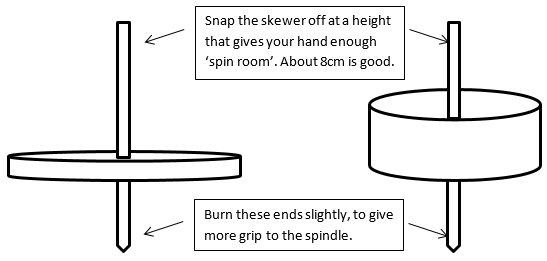
Any plastic bottle top will work, e.g. milk bottle, yoghurt, marmite jar. Use bamboo skewers for the spindle (vertical part). You can trim the skewers to size, which is a nice variation when students are trying to ‘tune up’ their tops. Small nails or screws are cheap and safe for making the hole in the centre of the top. It is important not to make the hole too big. The skewer needs to be pushed firmly into the hole and checked to see if it is at right angles to the top (students will find that out in the tuning process). Adding weight to the spinner can also increase the spin time. Blutac or plasticine is good for putting on the inside as it keeps the spindle vertical and the position of the weight can be altered. Take care. Not a lot of extra weight is needed and it is very easy to unbalance the top.
The first mathematical challenge is finding the exact centre of a circle. Discuss what is likely to happen if the hole is not in the middle of the plastic bottle top. Since tops rely on balance an off-centre top will not spin for long. Challenge the students to find a way to find the centre of a circle. You might give them some paper circles to experiment with. Rulers and pencils will also be helpful.
Students are likely to suggest the ‘cross method’ of finding two diameters, one vertical and the other horizontal. This method is quite accurate but it is not always easy to ensure the lines are actually diameters.
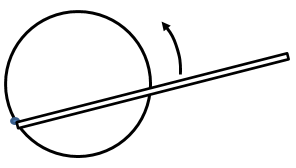
Draw a large circle on the whiteboard and mark a point on the circumference. Put the zero mark of a metre-long ruler on the point and rotate the rule about it.
Ask, “How will I know when the ruler is making a diameter?” Some students might notice changes to the measurement from the point to where the ruler crosses the other side. 
“If the measurement changes how will I know when I have a diameter?” The ruler marks a diameter when the measure is at its greatest. The measure declines as the ruler is rotated from that position.
You can now draw a diameter on the circle.
Ask, “Where will the centre of the circle be?” The centre is at the midpoint of the diameter (C).
Students can then make their spinning tops. Since this is a celebration of Māori culture they might like to consider how the inside circle of the top might be decorated. 
Ask, “What will happen to the design as you spin your top?” In fact much specific detail will be lost as the top rotates so encourage your students to keep the design simple. They could decorate directly onto the plastic with spirit based pens by cutting a circle of paper the size of the top, decorating that and putting it inside the top is a safer option.
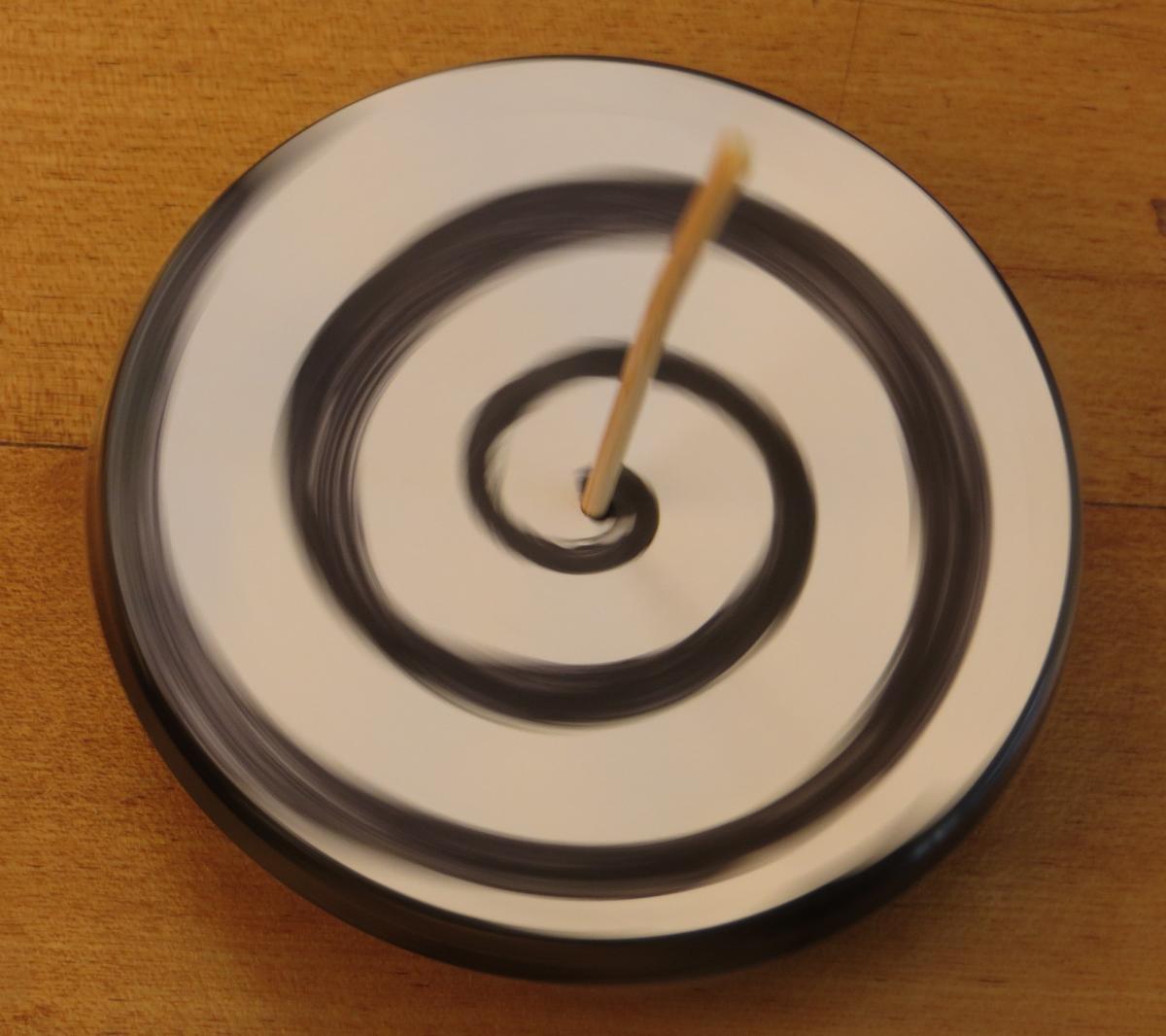
This beautiful koru spiral top was made from a plastic yoghurt lid and spins for about one minute.


Saturday, 11 March 2017

Our Oceans

1a The water cycle


Read this carefully and trya and draw your own water cycle.

Water cycle diagram


Why care about water?

List some reasons why we need to care about water in Inquiry Book. Work in pairs-both discuss and record


Our ocean


Our plastic ocean


Oceans of rubbish


Monday, 14 November 2016

Wednesday, 14 September 2016

How to prepare harakeke part 2

How to prepare Harakeke part 1

Flax Reading

Read this article on flax- this is a big read.

Think about what is important and interesting.
Also - how is flax important to Māori?

How could you share what you have learnt?

Flax - what can we learn? What do we know? What do we want to know?

Harakeke - New Zealand flax


Harakeke (New Zealand flax, or Phormium tenax) is the plant at the heart of Māori weaving. Read an overview of its cultivation, symbolism, and harvesting.

Cultivating harakeke

Māori cherished harakeke and cultivated plants in special plantations, called pā harakeke.
They grew many varieties for specific purposes – to produce clothing, fishing nets, bindings, baskets, and mats, and also to use in medicine.
To make kākaku (cloaks), weavers extracted and processed the inner fibre of harakeke, called muka. They used this to weave the base. They also used strips of the whole leaf – to create the thatch-like protective surface of pākē (rain capes) and to adorn other styles of cloak. 

Symbolism – the harakeke family

For Māori, the fan-shaped harakeke plant represents a whānau (family). This symbolism reflects the importance of the plant in Māori life.
  • The rito, or inner shoot, is likened to a child and is never removed. A family must protect its offspring if it is to survive.
  • The awhi rito, or protectors of the rito, stand on each side. They are seen as mātua (parents). Like the rito, they are never harvested.
  • Only the outer leaves, likened to extended family members, are harvested.

Harvesting harakeke

Māori maintained many tikanga (protocols) to nurture harakeke. The protocols differed by iwi (tribe), but some, like those below, were commonly followed.
  • Weavers say a karakia (prayer) before cutting the first blade of harakeke.
  • They always cut on the diagonal, away from the plant’s heart and from top to bottom. This helps rainwater drain away and prevents the heart from being flooded and dying.
  • Harvesting is not permitted at night or in rain.
  • No food can be taken into the pā harakeke.
  • Customarily, pregnant or menstruating women do not harvest or weave, as they are in a tapu (sacred) state.

Flax trade

Māori not only used harakeke themselves, they also traded it with early European explorers, who valued it for making ship rigging in particular. The Europeans named the plant flax because they thought it resembled the Linum plant. But harakeke is actually a type of lily, from the Hemerocallis family.
From the 1820s and into the 1900s, European settlers exported large amounts to rope-makers overseas.
http://collections.tepapa.govt.nz/Topic/3623

Flax preparation

Harakeke

The history of NZ flax